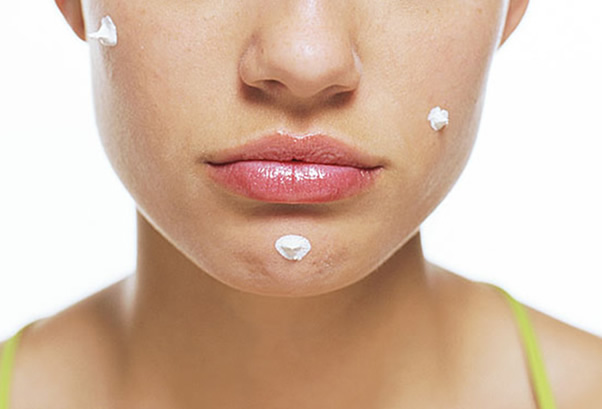
Useful advice on caring for acne-prone skin. What to do and what to avoid when your skin is prone to acne.
We do not choose our skin type. It is determined genetically and cannot be changed over the course of a lifetime. It has to be accepted, kept away from whatever irritates it, and cared for properly. The commonest dermatological condition on combination or oily skin is ACNE.
Dr Dana Popoiu, a dermatologist at Dermestetica, writes about this condition, which has a major psycho-social impact on those affected, and about how to care for acne-prone skin, in the book “Puternică și frumoasă” by Anca Rădulescu.
ACNE is the eighth most common disease in the world and affects roughly 85% of people between the ages of 12 and 24. Its psycho-social impact is beyond dispute, which is why it is worth being informed: acne is not an incurable disease, and you should feel confident about turning to a dermatologist for sound advice on caring for acne-prone skin.
Two moments of the day are essential to caring properly for problem skin: the evening and the morning. Each with its own ritual. In the evening the skin has to be cleansed thoroughly to prepare it for the treatment creams, and in the morning it has to be moisturised and protected against the environment with the right products.
The first step towards clearing acne is taken in the evening, when the skin is cleansed thoroughly of make-up and dust, and of the sebum the skin has produced during the day. The right product here is a pharmacy micellar water: an alcohol-free, non-astringent solution that lifts substances off the skin properly.
The next step is washing with gentle foaming products that remove the last impurities from the pores.
After cleansing comes the application of the treatment products on perfectly dry skin. Depending on how severe the acne is, topical products ranging from the gentlest to the strongest may be applied, only on a dermatologist's instructions. Treatment creams contain substances meant to dissolve the plug obstructing the follicle, to reduce the production of sebum, and to act powerfully against bacteria.
In the morning, after washing with lukewarm water, apply a non-comedogenic moisturiser made for combination or oily skin. Then apply a sunscreen, a dermatocosmetic product, with an SPF of at least 30+. Note: never apply sunscreen directly onto bare skin. A fluid foundation made for this skin type can be applied over the sunscreen.
Thick, compact, high-coverage make-up should not be used daily. Frequent exfoliating scrubs are not recommended either, so as not to irritate the skin and make the lesions worse.
For moderate and severe forms, a systemic treatment with an antibiotic or hormonal medication is also indicated, only on a doctor's instructions and under their supervision.
Acne-prone skin usually leaves scars. The best treatment in this case, though, is prevention. I would advise against traumatising the lesions by squeezing them. That should be left to the doctor, in sterile conditions, and done after microdermabrasion, a procedure that exfoliates the superficial layers of the skin and makes the keratotic plug easier to extract.
Once they have appeared, scars can be treated with a range of technologies, with very good results. Depending on the kind of scar, you may benefit from microdermabrasion, chemical peels, dermapen / dermatological roller, filling with a filler, fractional CO2 laser or surgical excision.