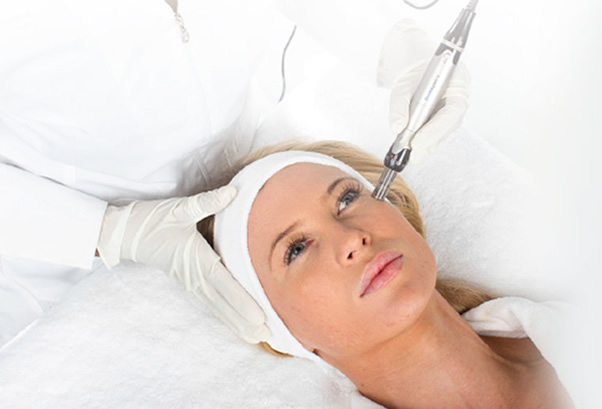
Microneedling / DermaPen is a simple, effective and minimally invasive method first introduced for skin rejuvenation.
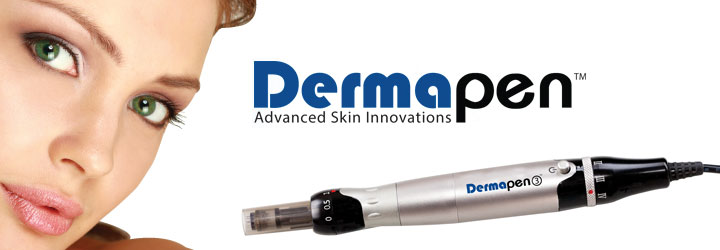 Microneedling / DermaPen is a very simple, effective and minimally invasive method that was first introduced for skin rejuvenation. It is now used with remarkable results for a wide range of indications, such as post-acne scars, post-traumatic, post-burn and post-surgical scars, alopecia, rosacea, stretch marks and many others.
In a very short time it has won remarkable success among the procedures for rejuvenation and collagen stimulation.
 Over the past ten years many improvements have been made to the original instrument (the dermaroller – a roller with very fine sterile needles), which has evolved into a fully automated instrument with single-use needle cartridges: the DermaPen.
It is a particularly effective and safe procedure for patients with darker skin, who are prone to post-inflammatory hyperpigmentation, compared with other methods that injure the epidermis (such as lasers or chemical peels).
How does the DermaPen work?
 The fine needles create microchannels, causing a controlled injury to the dermis. These set off the inflammatory cascade (days 1 to 5) and the body's healing response (days 5 to 21) by releasing numerous growth factors such as
PGF (platelet growth factor), TGF alpha and beta (transforming growth factor) and FGF (fibroblast growth factor). The needles also break up the fibrous tissue in a scar and allow it to be revascularised, the collagen fibres to grow in an orderly way, and the scar to be remodelled.
Neovascularisation (the formation of new blood vessels) and neocollagenesis (the formation of new collagen fibres) are set in motion by the migration and proliferation of fibroblasts. Five days after the treatment, a fibronectin matrix begins to form, which leads to the deposition of new collagen in the form of collagen III; according to histopathological studies, this persists for 5 to 7 years.
The same histopathological studies show a 400% increase in collagen and elastin in skin treated with 4 microneedling sessions a month apart.
How does the procedure go?
 DermaPen is an in-office procedure that takes between 10 and 20 minutes of actual treatment, depending on the area. It is carried out after the skin has been numbed with a potent anaesthetic cream for 20 to 40 minutes.
The DermaPen, its needles vibrating at high speed, is then passed over the skin in several directions, until a uniform pinpoint bleeding appears, which marks the end point of the procedure. Afterwards the openings made by the needles close instantly and the skin is left pink.
Re-epithelialising masks, a moisturiser, a sunscreen and even a mineral foundation are applied, so that the patient can carry on with the day as usual.
For maximum effect, 4 to 6 sessions are needed, 4 to 6 weeks apart.
The production of new collagen carries on for 3 to 6 months after the treatment.
After the DermaPen treatment
After the procedure, the microcrusts that form fall away by themselves over the next 2 or 3 days. In practice this is a therapy with no downtime, relying on the extraordinary capacity of the human body to repair itself.
After the DermaPen sessions the skin is denser and firmer, it regains its elasticity and tone, scars are levelled out and dyschromia (patches of uneven colour) fades considerably.
Combining the DermaPen with other therapies, such as injecting botulinum toxin (for dynamic expression lines) or injecting fillers for static wrinkles, produces striking, genuinely remarkable results.